GREAT TRAUMA


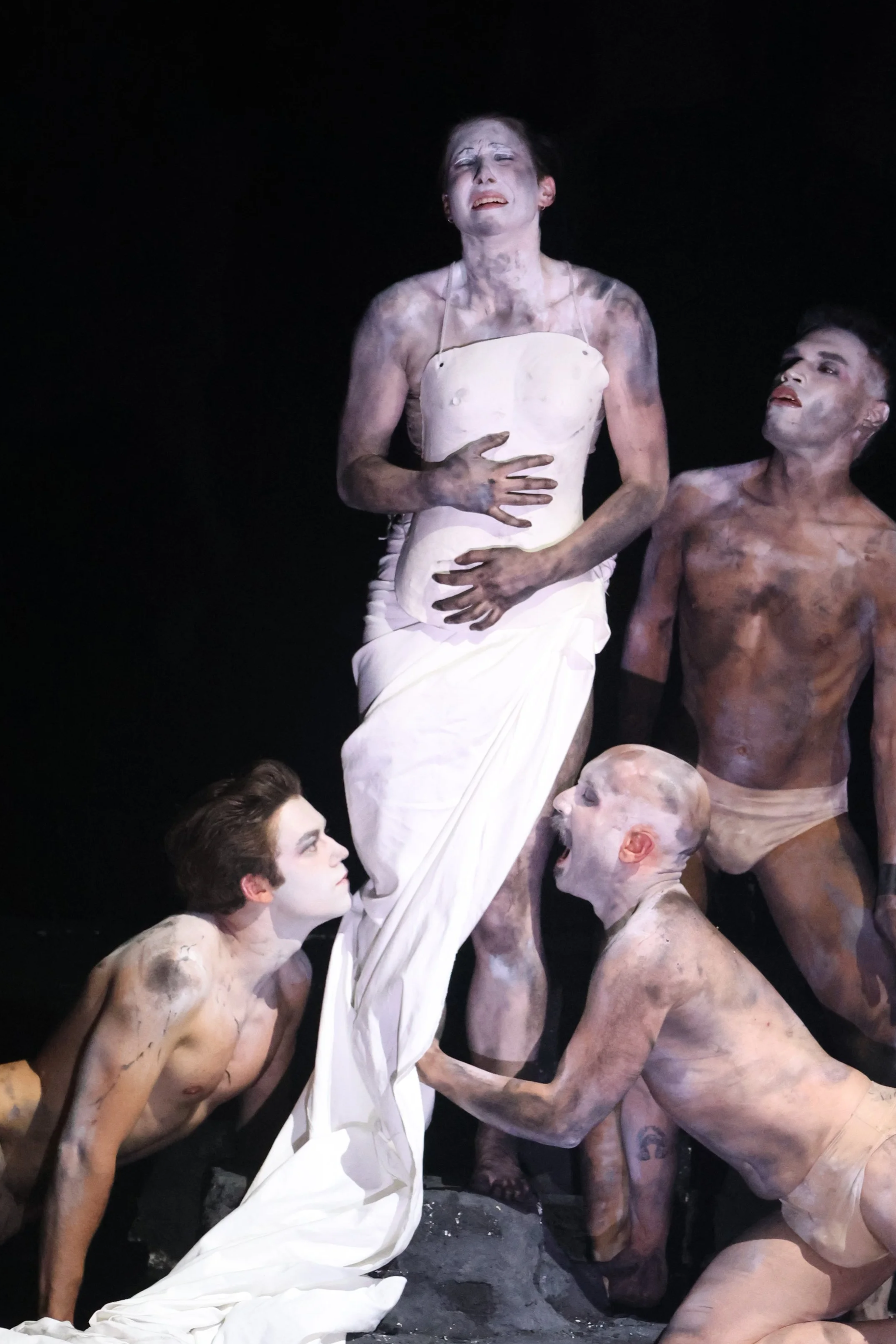

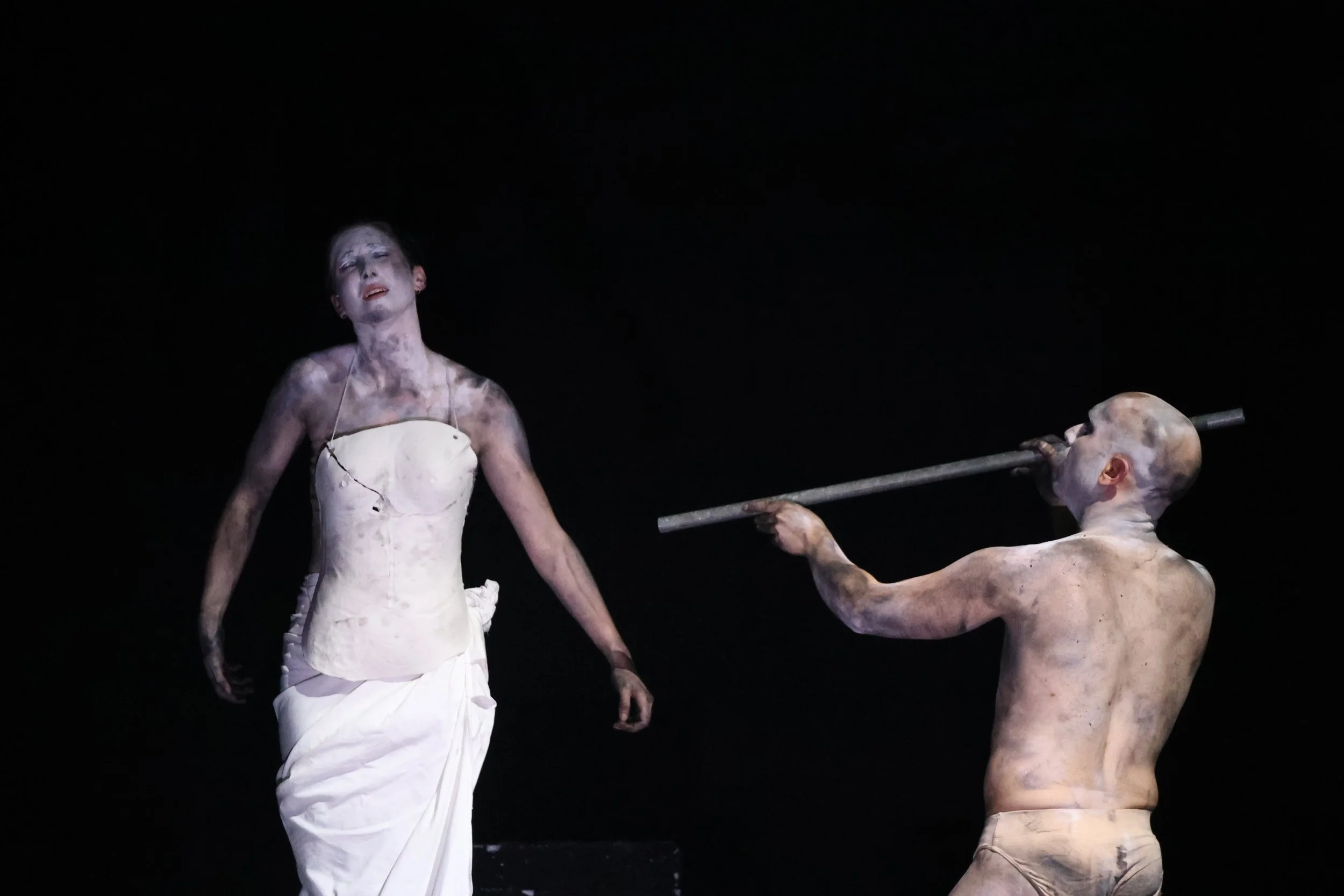

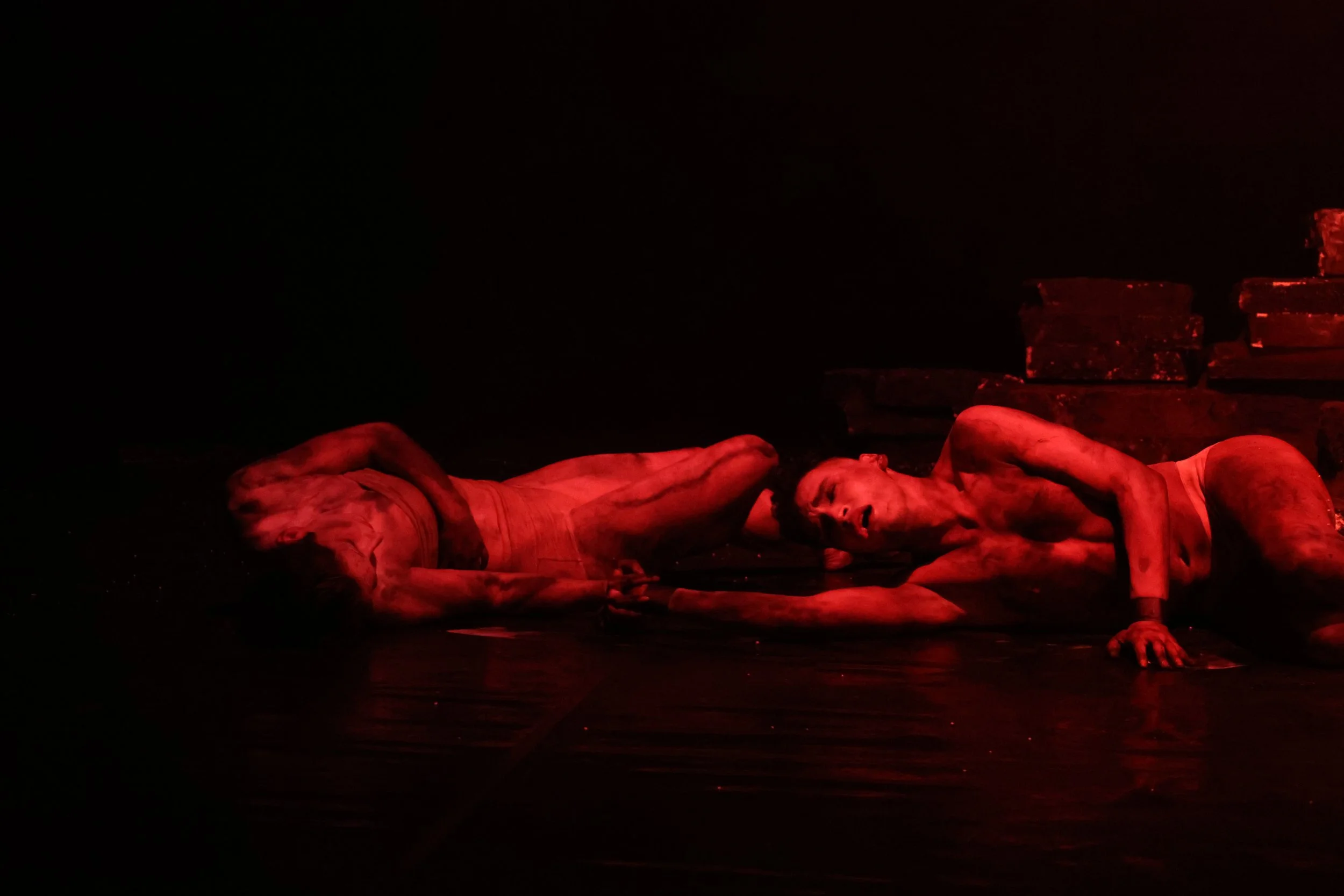
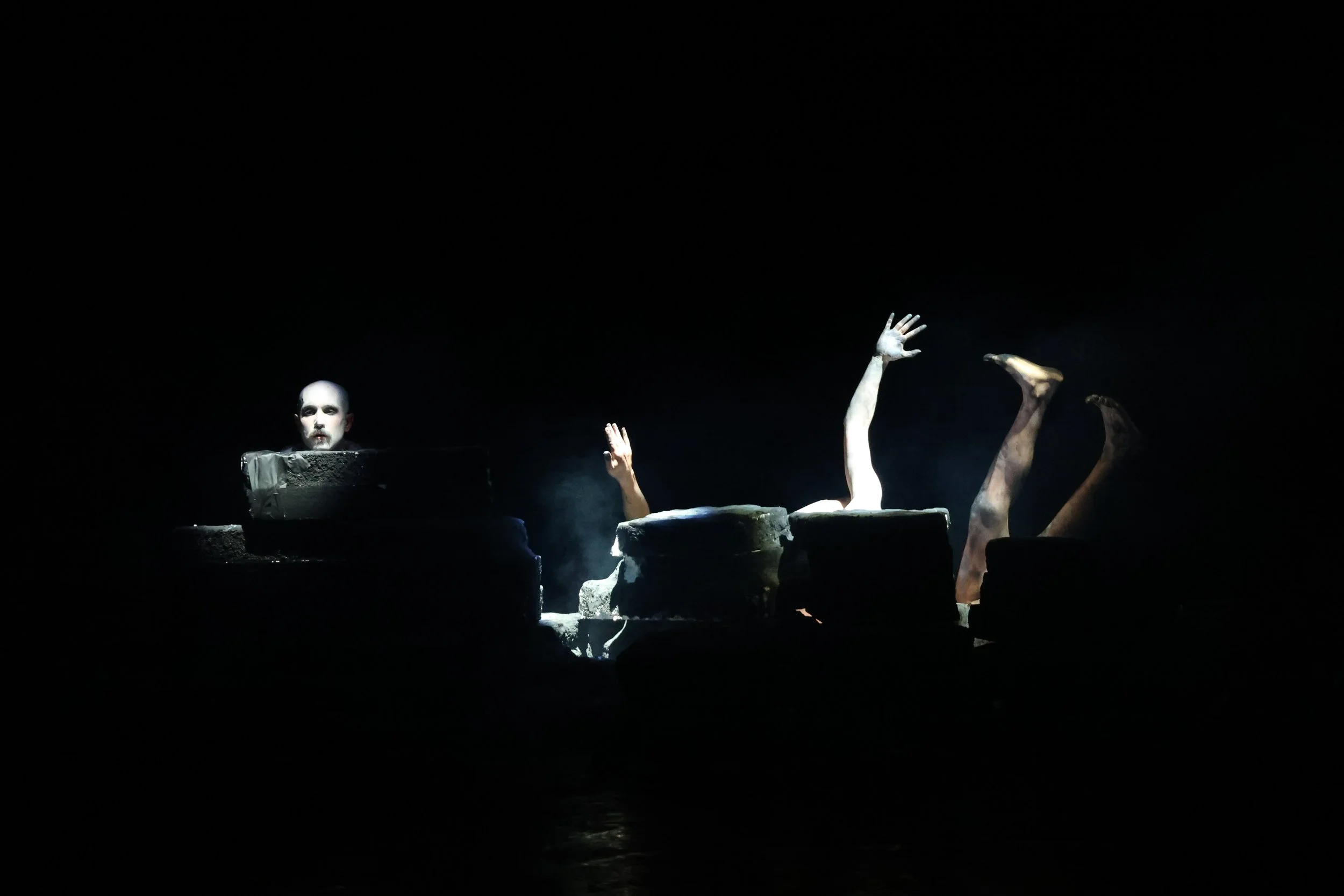
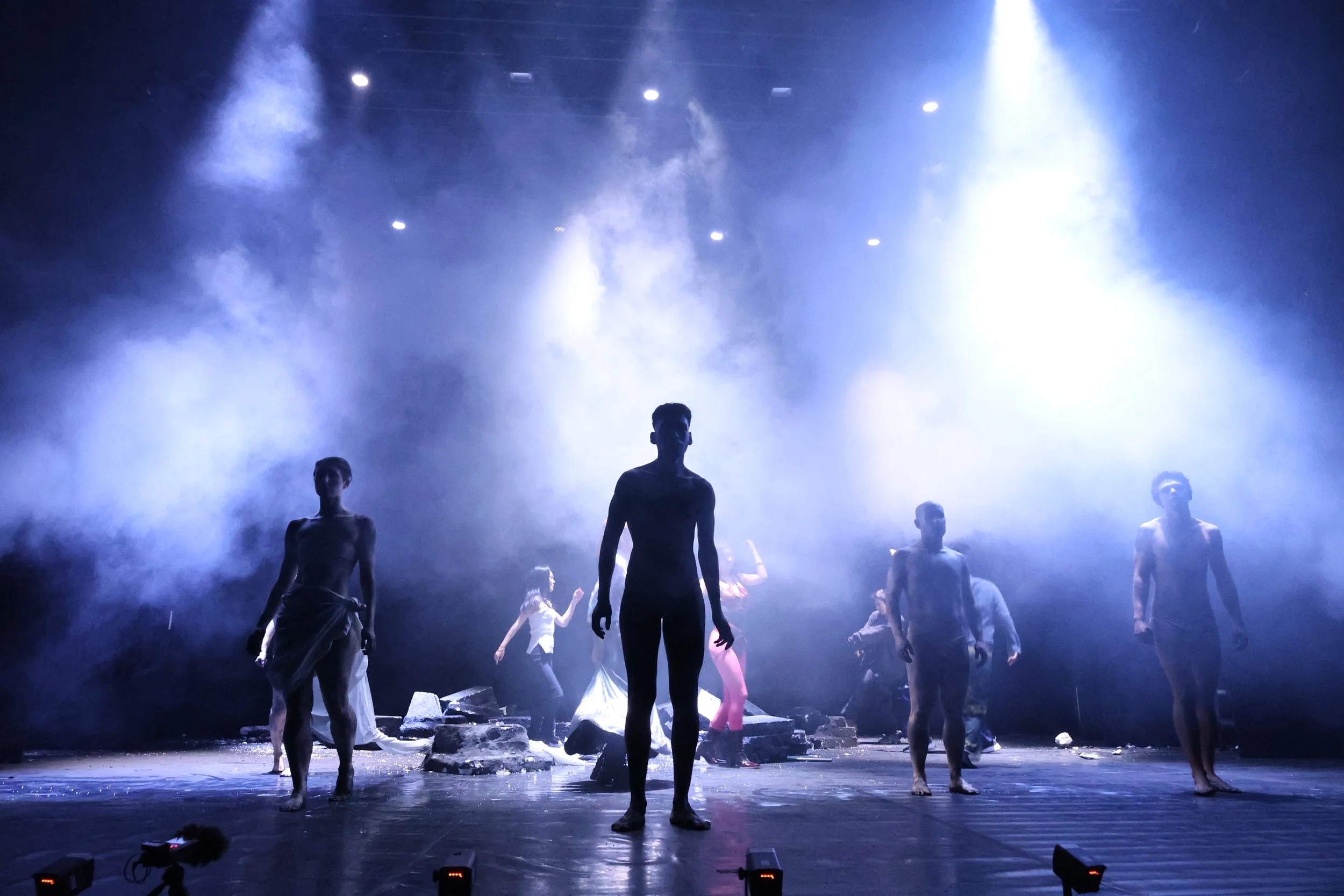

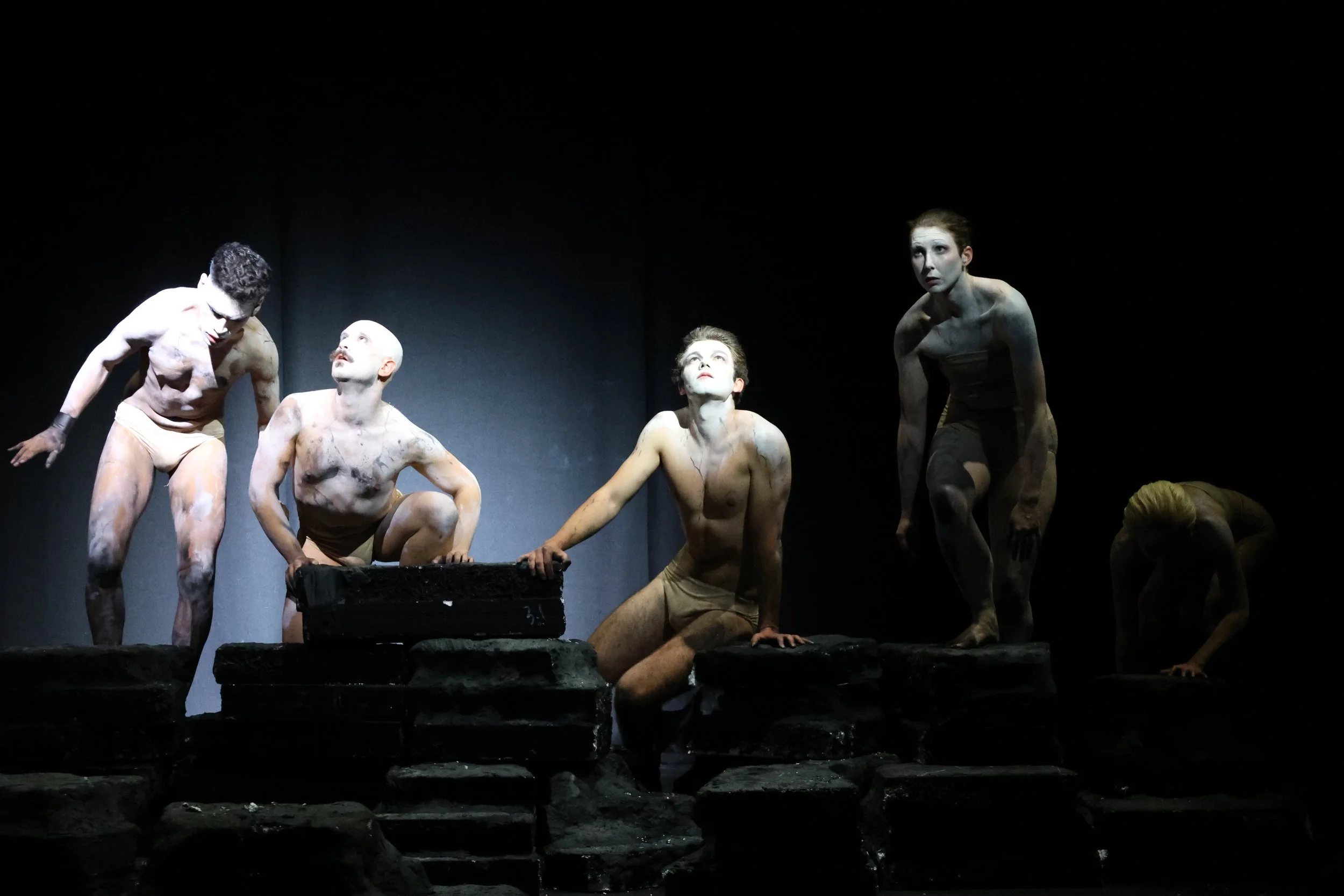
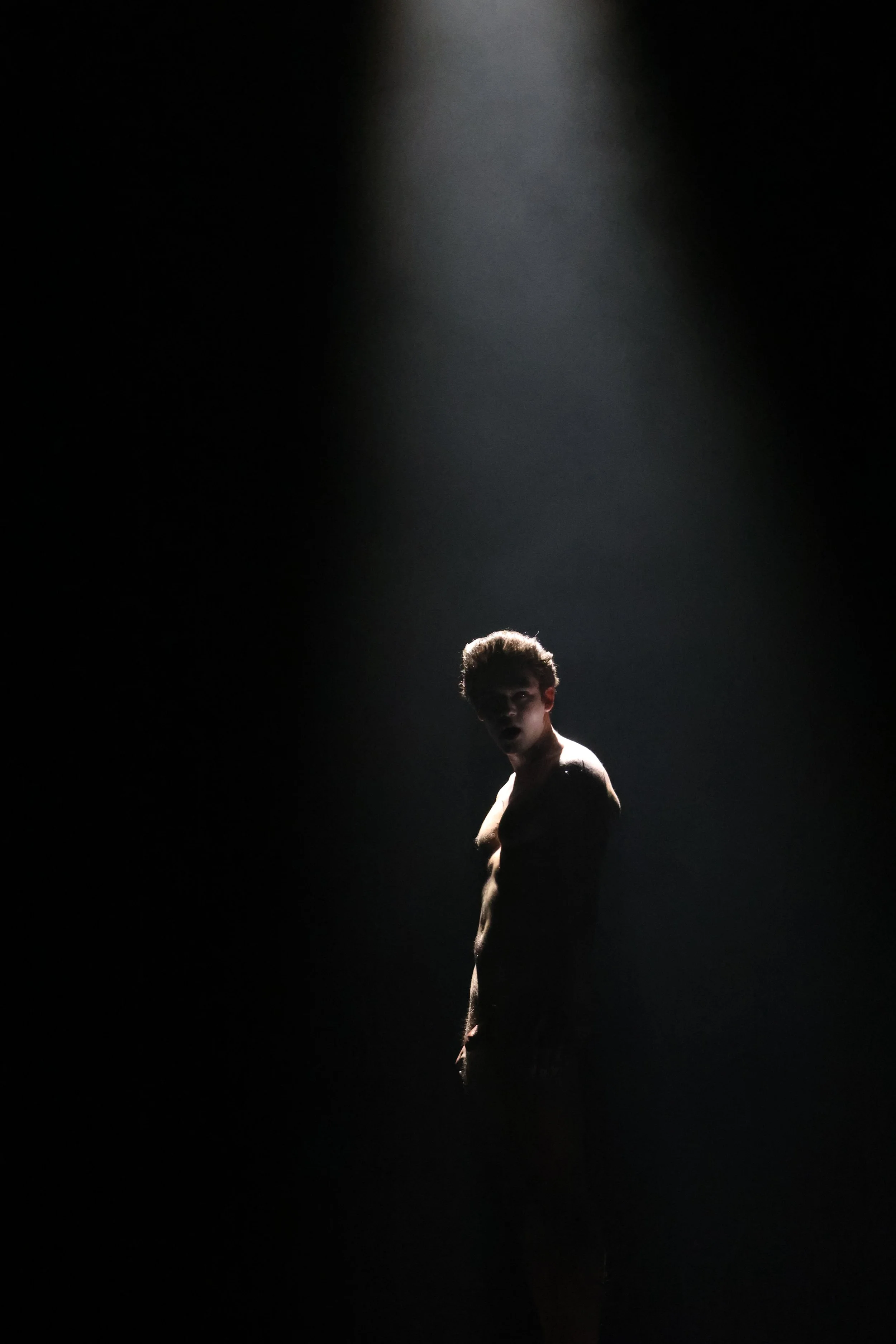

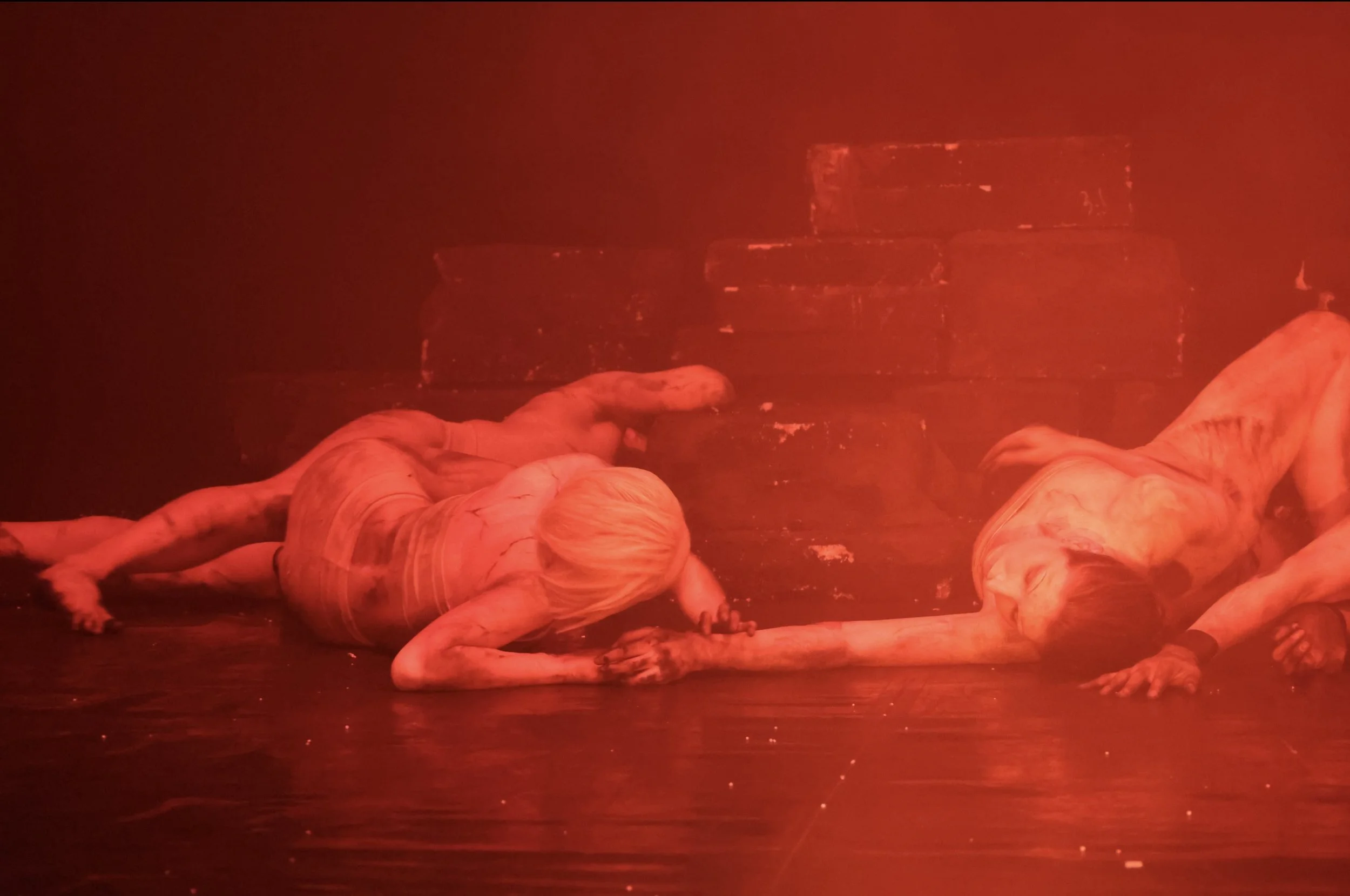
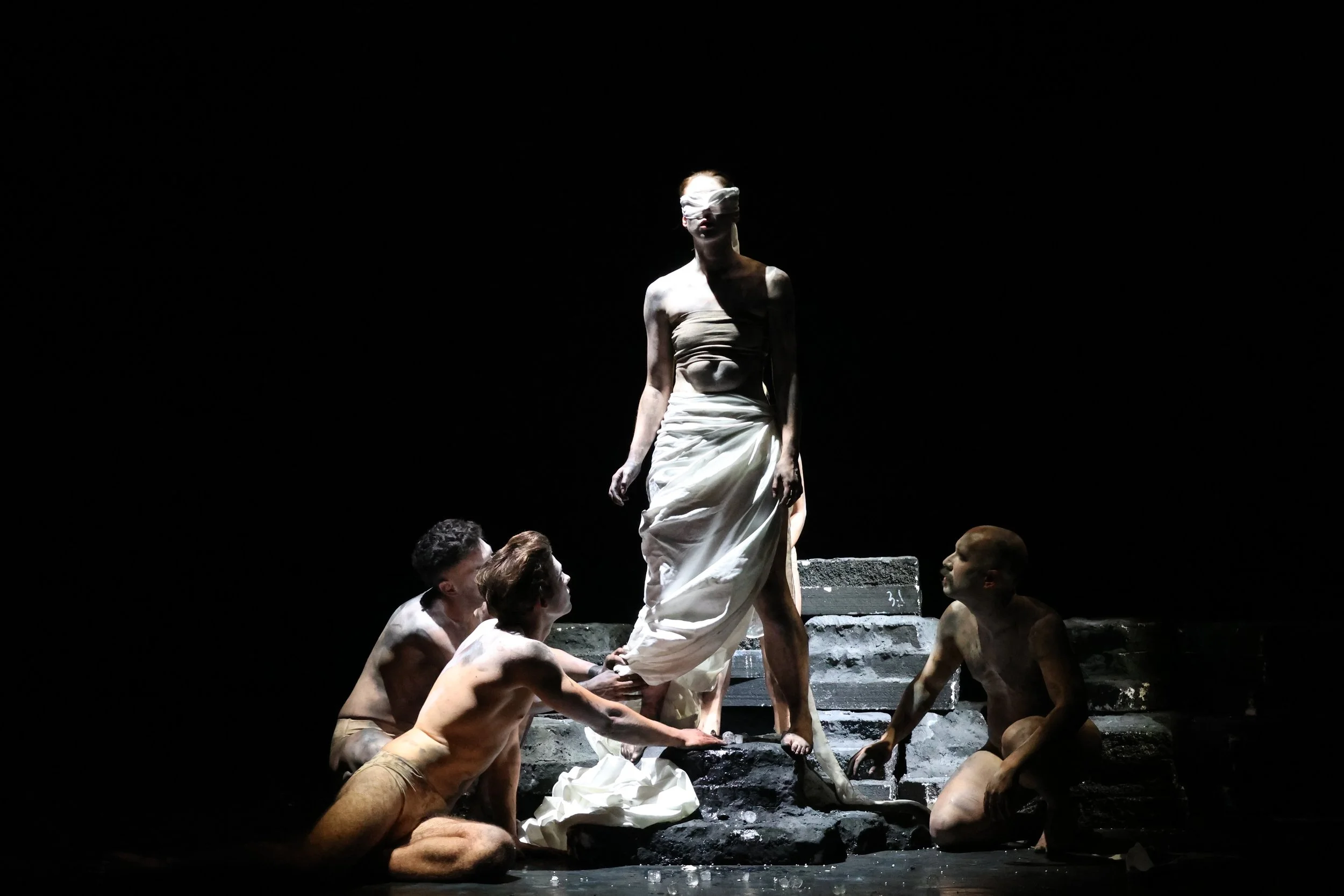
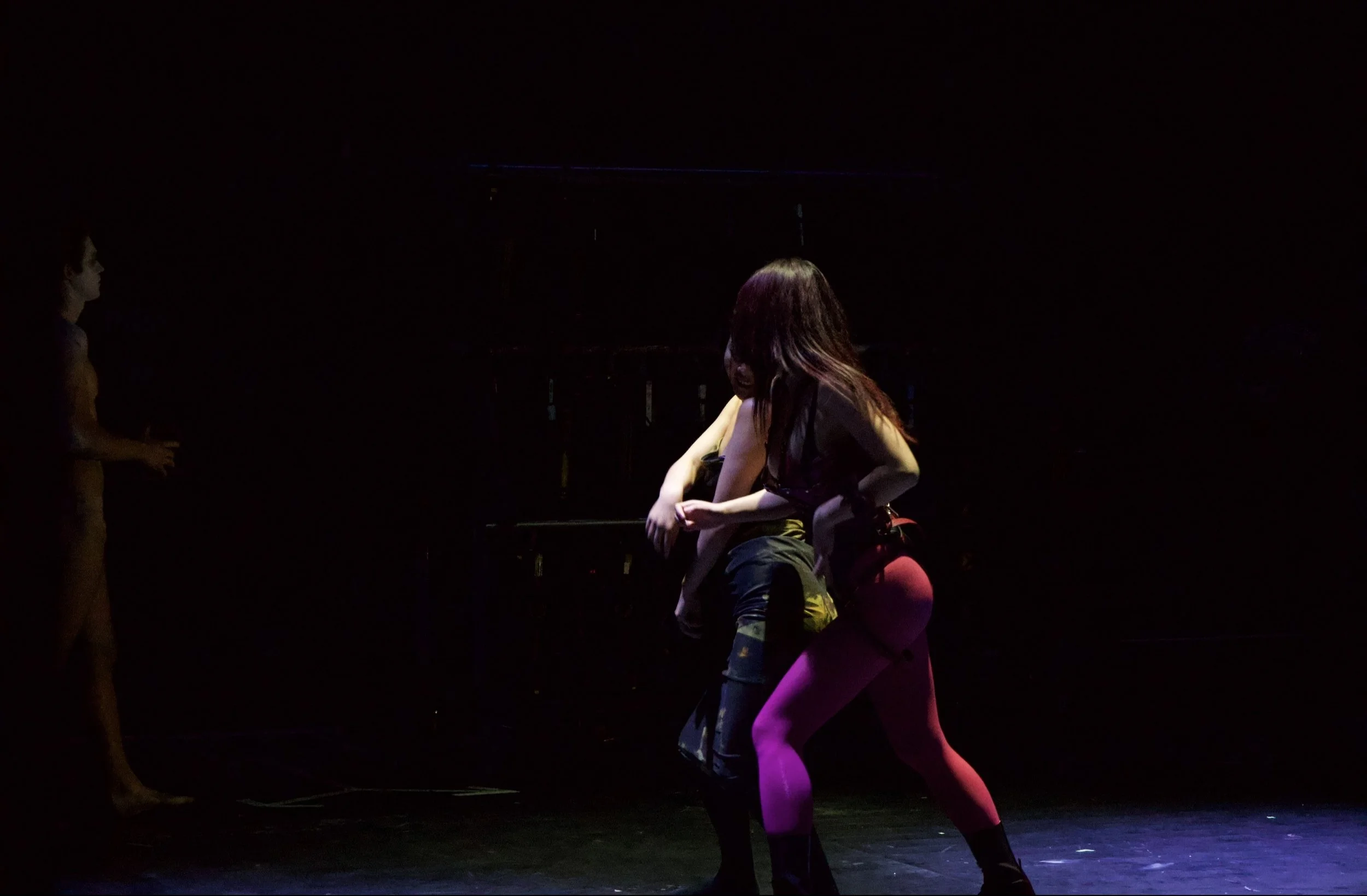
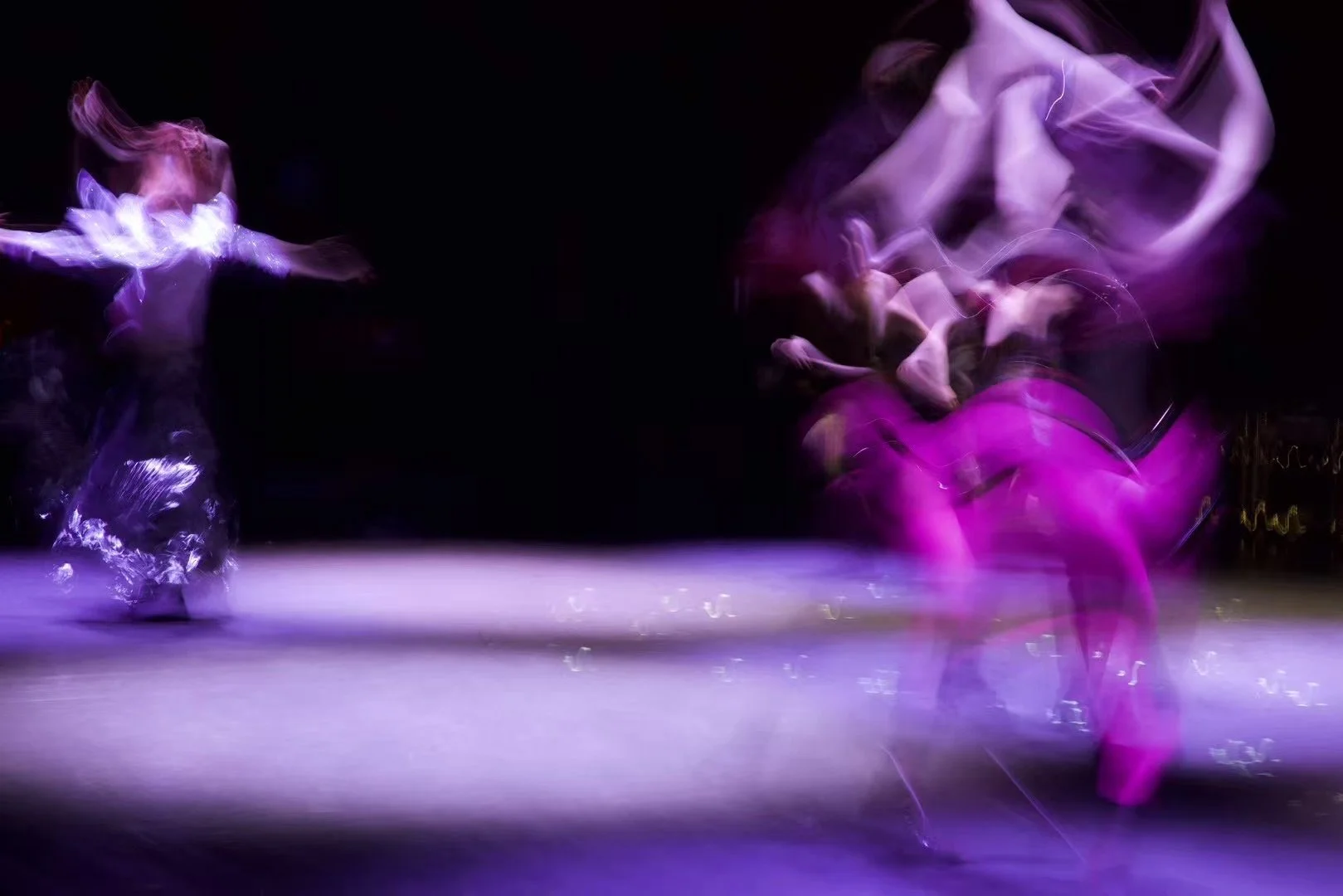
How to tell a story that is not a story? How to tell a story without words? How to feel a feeling that arises elsewhere? These questions sit at the center of a problem theatre has always worked with. If one person is not another, no one can really inhabit someone else’s feeling, yet audiences have received performers’ feelings for as long as theatre has existed. Something passes between bodies in a shared room. This work is an ongoing inquiry into what that something is, and how performance might reach it directly rather than through a story or an explanation. Language fails often, inside and outside theatre, and when it does not fail it tends to serve story rather than actual exchange.
Great Trauma is the third public iteration of this inquiry. The first performance HYMNES ( Ancona, Italy October 2024), was a site-specific performance on the walls of an old mountaintop monastery. A naked monk figure climbed narrow stone walls with sheets, walking the edge as light shifted from sunset to nightfall. Physical action against natural conditions, wind, shadow, ambient light, carried what a storyline would have flattened. The second performance The Goat Ate Its Own Legs (Platform Theatre, CSM, January 2025), moved the inquiry indoors. A goat figure learning to stand like a man, whipped, resisting, striking back, taking its own life. A sequence of images and actions where atmosphere grew out of the body itself, the way something seems to grow outward in a William Blake painting. Action and environment replaced story. The experiment was how to bring weather indoors, how environment itself could carry what language could not, shifting conditions triggering action, action shifting the conditions back.
The premise of Great Trauma became real action. Not performers representing states, performers actually entering them. Six performers and handmade textile stones made with Ziyi Wang, months of testing powder ratios until the stones carried real weight, left real marks, forced actual compensations in the spine. When a performer’s knee buckles under a stone, that is not choreography. When ice melts and drips from a performer’s body to the floor, that is not a symbol of anything, that is cold water moving between two bodies, changing temperature as it falls. The performance is built from these actual material encounters. The performer’s lived experience, weight, cold, resistance, exhaustion, is what the audience is asked to receive, not through empathy or interpretation but through the immersed air of the room.
What makes formless feeling perceptible, visible, audible, physically felt? Not language. Words tend to arrive before sensation does and take the space sensation needed. Without them, sound becomes hyperaudible, breath, friction of stone on floor, grain scattering, the drip of melting ice. Everything happens live because a sound’s physical source is what gives it psychological weight. For visibility, the work moves through flowing mediums rather than fixed images, haze, temperature shifts, moisture. These are things that make light tangible instead of lighting up objects. Light with an edge you can feel. Air you can see moving. The environment becomes something to metabolize, not something to watch.
Much of the method came from testing sensory thresholds, and these thresholds had to be real, lived, in the performers’ bodies first. At normal levels of stimulus, perception dulls. A body pushed toward the edge of what it can bear becomes hyper-alert to everything around it, the weight of another performer’s breath, the temperature of a draft, the texture of sound carrying across the floor. Audiences enter the same state by proximity. So the testing kept asking, how slow can movement become before attention starts to fracture? How cold before discomfort tips into alarm? How long before a pile of stones growing onstage shifts from absurd to dreadful? The performers are not performing exhaustion. They are actually at the edge of their endurance, negotiating real weight in thickening air. That suspended state the body enters when it is past comfortable but not yet broken becomes tension in performance, what Matthew Barney calls Cremaster, the physiological hover between contraction and release. This became dramaturgical material. Not scenes that advance, but thresholds that sustain, tip, sustain again. The audience’s nervous system tracks this whether there is language for it or not.
This is where performer development had to change. If thresholds and tension are the material rather than scenes, conventional acting methods start to work against the piece. A threshold cannot be represented. It has to actually be entered. The process developed something that might be called breath-muscle-driven imagery. Performers move from one image to the next by treating the space between as a gaseous or liquid environment, using breath and muscular tension to pass through it. No gesture vocabulary, no representation. Just breath radiating pressure into space, muscle responding to actual material resistance, obstacles met by adjusting breath and tension rather than by breaking action. The training drew on Laban effort dynamics for physical articulation, Michael Chekhov’s radiating technique for how a body inhabits and transmits atmosphere, and environmental thinking for how conditions in the room shape what the body does. When performers are really inside these conditions, the audience feels it through their own breath. Feeling transmits through shared physiological response.
Matter in actual transformation becomes the mythological material here. This way of thinking about theatre owes a lot to Papaioannou, who treats the stage as a place where matter morphs into something else, where images are not fixed but in continuous transition. Mountains forged in fracture. Stone breaking to sand. Ice melting to liquid. Bodies approaching collapse without reaching it. Not metaphors for something else. Material processes everyone in the room witnesses and registers.
The collaboration method had to change to accommodate this. Standard theatre hierarchy does not work when textile, scenography, lighting, and performance all need to solve the same material problem at once. The stones had to hold weight, leave marks, respond to bodies, and function safely on stage. That is not a prop decision. It is a performance decision that lives across departments. Lighting came from a background in architectural installation, which allowed light to be treated as climate rather than illumination. What emerged is a cross-departmental way of working where material questions come first and disciplines rearrange around them.
The questions the work keeps opening are about where this method goes next. What happens when environments have more agency. When actual weather takes part rather than being simulated. When this approach meets feelings still untested in the room. The territory of the work is the moment where a sensation becomes legible in the room before it becomes speakable in words. That is where theatre still has something only theatre can do.
CREATED/CONCEPT/DIRECTER/SCENOGRAPHY DESIGN
JIaming Wang
PERFORMERS
Pablo San Miguel, Meg Bagnall, Ruochen Li, Jaime Prada, Jerome Godfrey
MATERIAL/TEXTILE DESIGN
Ziyi Wang
SET DESIGN AND MAKING
Minko Zhang, Yanxi Mou
ASSISTANT TO THE SET DESIGN
Lynia Cao, Mia Huo, Teresa Si, TT Tang
LIGHTING DESIGN
RACHEL DUAN
COSTUME DESIGN
Yifan Jiang
CREATIVE PRODUCER
Sanri He
STAGE MANAGER
Qiushi Zhang
TECHNICIAN HEAD
Michael Ste-croix
ENVIRONMENT NARRATIVE
Mithilesh Asawa
LIGHTING HEAD
Luke Cunningham
SOUND DESIGN/ORIGINAL MUSIC
Yingxin Xu
SOUND CONSULTANT
Victoria Salmon
COORDINATION HEAD
Faust Peneyra
A project by
Jiaming Wang //WAWA THEATRE 3M STUDIO
DIFFUSION
OBSCURAE.CO.UK, CSM NEWS
ART HAPPENS
Athina Vahla, Jingjing Sun, Wenxuan Bao, Michael Breakey, Yuchen Zhou, Yui Yamamoto, Peter Brooks, Siqi Zhu
PLATFORM THEATRE, WHITE LAB